RSA Events – RESEARCH NETWORK GRANT SCHEME REPORT – RSA Research Network on Knowledge, Innovation and Regional Development in South America (KIRDSA)

RESEARCH NETWORK GRANT SCHEME REPORT
RSA Research Network on Knowledge, Innovation and Regional Development in South America (KIRDSA)
Research Network summary
This research network aims to promote research on regional development in South America, with a focus on knowledge flows and innovation capabilities. Knowledge capabilities are unevenly distributed within national and subnational territories in South America, a region characterised by a peripheral but significant role in the global production of knowledge. These countries have a rich background of research in this field, associated with urban development, production agglomerations, emigration fluxes, and the role of universities, among others. It is highly relevant to articulate research activities that advance our understanding of regional development processes that promote knowledge creation and improve access to global knowledge flows. This network aims to help address these challenges by producing relevant evidence and discussing it with policymakers.
Organisers
Andrea Belmartino (University of Sassari – Italy) email
Pablo Galaso (University of the Republic – Uruguay) email
Sergio Palomeque (University of the Republic – Uruguay) email
The RSA Research Network KIRDSA advances scholarship and policy dialogue on regional development in South America, with a particular focus on knowledge flows and innovation capabilities. The network responds to persistent territorial heterogeneity in the region and aims to build evidence and exchanges that inform place-sensitive policy (read more).
III Edition of the KIRDSA Conference
The III Edition of the KIRDSA Conference was made possible thanks to strong institutional backing. In addition to the Regional Studies Association (RSA), the event received support from several key regional and international organisations:
- Comisión Económica para América Latina y el Caribe (CEPAL / ECLAC)
- UNESCO Chair “Science, Technology and Innovation Policies for Sustainable Development in Latin America”
- Inter-American Development Bank (IDB)
- Young Scholars Initiative (YSI)
- Universidad Nacional de San Martín (UNSAM)
- Universidad Nacional de General Sarmiento (UNGS)
Their collaboration was essential to ensuring the event’s academic quality, visibility, and regional relevance.
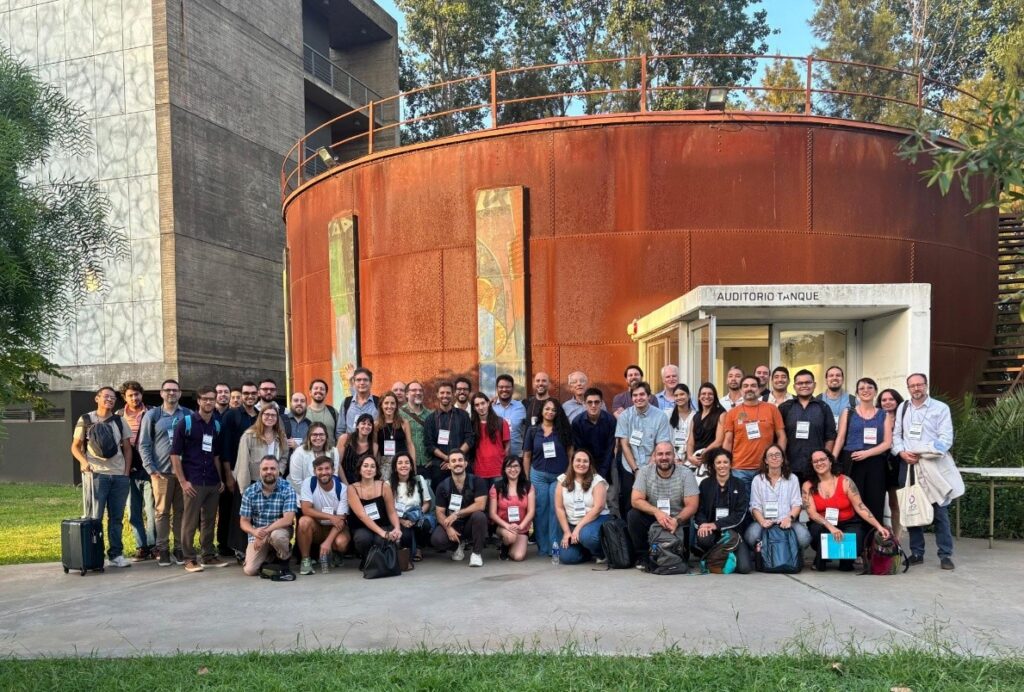
Hosted by UNSAM in partnership with UNGS, the III Edition of the KIRDSA Conference offered a rich and dynamic programme, including 4 plenary panels, 1 keynote, 1 interactive workshop, and 23 parallel sessions, featuring 78 articles.
Programme highlights
Panel – Innovation and Regional Development: How to Overcome Territorial Asymmetries in Argentina.
Florencia Barletta (UNGS), Lilia Stubrin (CONICET-CENIT/UNSAM) and Soledad Villafañe (CEPAL) examined how uneven knowledge infrastructures and industrial capabilities reproduce long-term regional gaps in Argentina.
Panel – Energy and Digital Transition.
Lian Allub (CAF) and María de las Mercedes Menéndez de Medina (UNESCO Chair, UNU-MERIT) explored the twin transitions shaping production, emphasising coherent policy mixes that align sustainability goals with digital upgrading.
Workshop – Applications of Innovation Capability Indicators and Datasets.
Led by Federico Moscatelli (WIPO) and Carlos Navarrete (Universidad de Concepción), this hands-on session trained participants to construct and interpret indicators from the relatedness/complexity toolbox and to use datasets to diagnose territorial strengths and gaps, thereby strengthening data-driven policymaking capacity in the network.
Keynote – Ron Boschma: An evolutionary perspective on regional potentials of diversification and policies.
Drawing on evolutionary economic geography, Boschma discussed how relatedness, knowledge complexity, and historical trajectories shape diversification paths, offering a powerful analytical lens.
Panel – Sustainability and Digitalization: Development Gaps in South America.
Camila Gramkow (CEPAL), Julio D. Raffo (WIPO), and Fernando Vargas (IDB) underscored the dual challenge of closing structural inequalities while transitioning to greener, more digital economies, calling for coordinated strategies that bridge environmental goals, innovation policy, and digital inclusion.
Young Scholar Sessions
Young scholars and early-career researchers participated in a special session with senior mentors assigned to specific topics. Carlos Bianchi (UDELAR), Renato Garcia (UNICAMP), Lucia Mauro (UNMDP), and José Borello (UNGS, RSA Argentina’s Ambassador) provided constructive feedback to the participants.
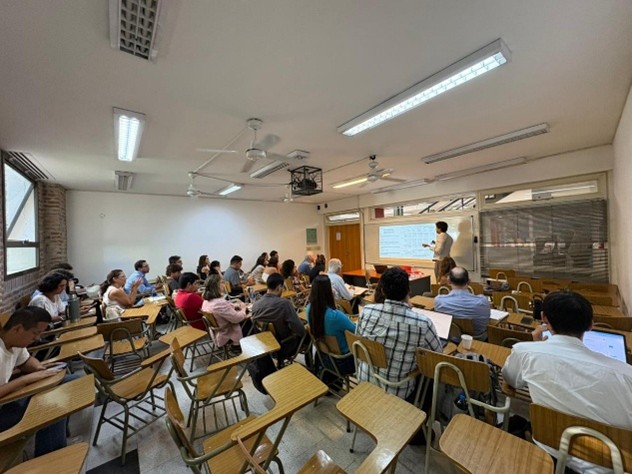
UNESCO Chair Special Session
Chaired by Mercedes Menendez, the UNESCO Chair in Science, Technology and Innovation Policies for Sustainable Development in Latin America organised two sessions addressing key challenges related to science, technology, and innovation in the region. A working paper is planned as an expected outcome of the session.
Parallel Sessions: The sessions covered a wide range of topics, organised into thematic groups including regional economics, structural change, economic complexity, innovation, green transition, bioeconomy, global value chains (GVCs), and public policies. Selected contributions were invited to be included in a Special Session proposal to be submitted to Regional Studies.
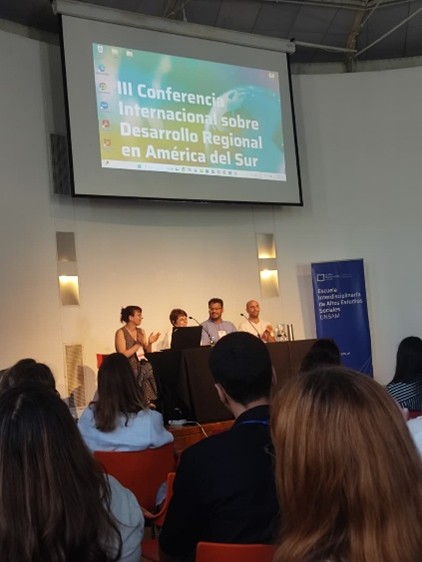
Closing Panel – Institutional Coordination & Multilateral Cooperation for Development in South America.
Verónica Robert (UNSAM) chaired a debate with Ron Boschma, Daniela Calá (UNMDP) and Romain Zivy (CEPAL) on how stronger ties among academia, governments and multilateral organisations can sustain research communities and bolster regional resilience, especially under fiscal and political constraints.
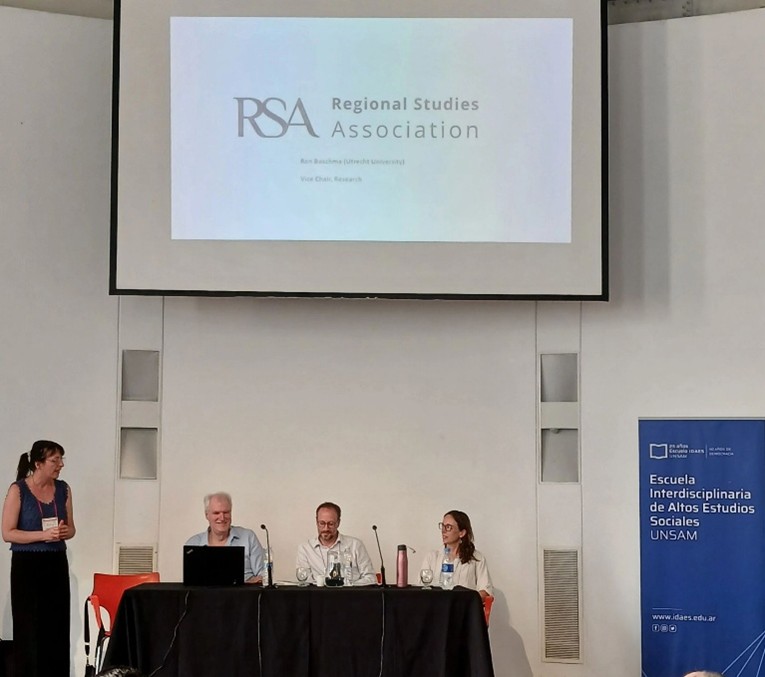
Ron Boschma presented the RSA grants, and we prepared a dedicated section on the conference website. During the conference, many participants asked about the membership opportunities, and some of them already confirmed that they joined RSA after the KIRDSA Conference.
https://events.rdmobile.com/Events/Details/19988