Directing regional industries towards sustainability: a study of Scotland’s space industry

DOI reference: 10.1080/13673882.2026.12563442
By Samantha Archard & Felicia Fai
How can industrial activities become more environmentally sustainable?
In the face of global sustainability challenges, the adoption of environmentally sustainable business models is widely regarded as key to industrial upgrading and has prompted national policy responses and sustainability targets. Yet, while necessary, national approaches can miss important regional differences in resources and capabilities. Place-based policymaking, by contrast, allows for greater sensitivity to context.
Within place-based approaches, deliberately designed regional agendas can be co-created with inputs from multiple organisations with a stake in the region, thereby enhancing policy coherence. Indeed, the evolutionary economic geography (EEG) literature encourages a decentralised approach to steering industries towards sustainable practices. In this regard, the articulation of policy priorities can be understood as agenda-setting, while directionality refers to decisions about what should—and should not—receive attention in the pursuit of that agenda.
Both a clearly defined agenda and strong directionality are essential for orienting and steering industries towards sustainability; however, the literature provides limited guidance on how directionality can be achieved in practice. There is a paucity of examples of both how a broad range of stakeholders can support policymakers in shaping industrial transitions, and which actors are most influential in directing transformative change.
In Regional Studies, Policy Debates we examine the development of a sustainability roadmap for Scotland’s space sector. The space sector illustrates both the opportunities and tensions inherent in sustainable industrial development. Space-based technologies and sensors can monitor the Earth’s natural environment. At the same time, satellite production, launch activities and orbital debris risk becoming environmentally unsustainable both on Earth and in space.
Space Sustainability – A Roadmap for Scotland (2022), endorsed by the Scottish government, sets out a commitment to reducing the negative environmental impact of Scotland’s space sector, both on the Earth and in orbital environments. The roadmap sets out a long-term framework structured around three themes (leadership, in-orbit operations, and environment/net zero) supported by defined actions over short-, medium- and long-term horizons (2025, 2035 and 2045). We conducted 38 stakeholder interviews and analysed 122 documents in the grey literature to explore: (i) why, (ii) by whom, (iii) how and (iv) when the roadmap was developed.
We construct a novel conceptual framework that draws on ideas from political science, adapted to a regional, place-based context (the EEG perspective) to provide a theoretically grounded approach to understanding how multiple stakeholders shape regional industry directionality within the broader agenda of sustainability. Our analysis also draws on ideas from the transitions management literature, showing that when a “window of opportunity” emerges to advocate for sustainability, multiple actors in the region can form a “transition arena” to collaborate on developing a sector-specific sustainability roadmap (see Figure 1). In turn, sustainability roadmaps have the potential to shape the long-term development paths of regional industries.
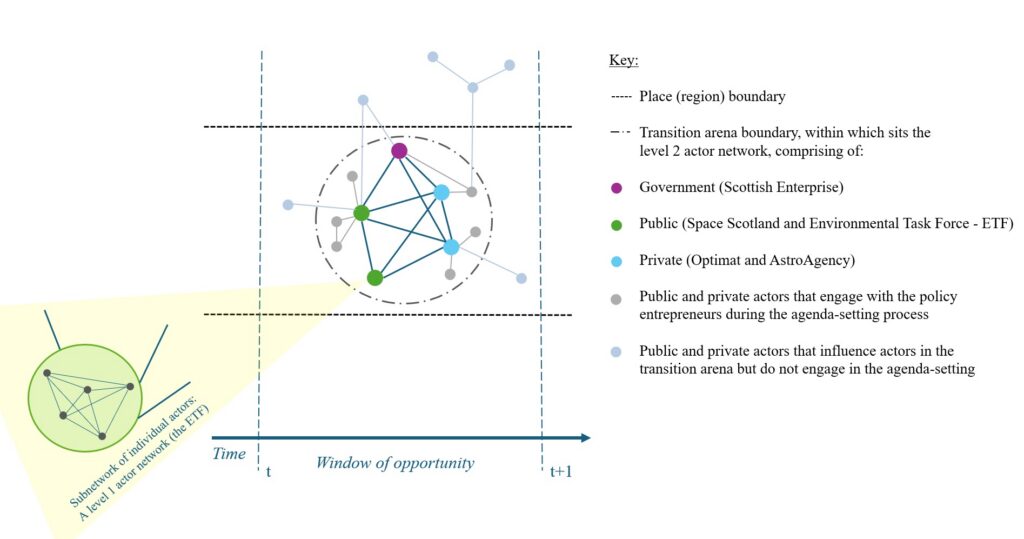
Figure 1. A place-based industrial sustainability agenda-setting framework for Scotland’s space sector.
Key findings for policy professionals
National policy frameworks often prioritise aggregate sustainability targets and industrial sectors may also specify their own goals. Both can overlook important differences between regions in terms of economic structures, resources and capabilities. We find that implementing policies at the regional level can improve alignment between businesses’ operational realities and environmental sustainability.
The English Devolution and Community Empowerment Bill, currently progressing through Parliament, presents an opportunity to strengthen regional approaches to climate policy. Yet while region-specific policies allow for greater sensitivity to local contexts, non-policy stakeholders—including local business owners, institutional strategists and academics—typically possess a deeper understanding of the structure and capacity of their regional networks, opportunities and constraints, than policymakers. As a result, they may be better placed to direct industrial activities in ways that reduce environmental harm and must have a more integrated role in steering their industries towards sustainability and in regional policy development.
Importantly, our analysis shows that broad participation in roadmap development helps to build stakeholder buy-in and reduces resistance to its subsequent implementation. It also suggests that roadmaps should remain adaptable rather than defining rigid development paths, to allow for adjustments as circumstances evolve over time. Furthermore, while roadmaps can outline plausible trajectories, they are not policies in and of themselves. Roadmaps function best as primers to policy and are most effective when combined with policy instruments that incentivise action and investment.
Lastly, this study surfaces a strategic dilemma facing Scotland’s space sector. Today’s increasingly fragmented climate change policy landscape raises concerns that sustainability agendas could impose short-term competitive costs on those who opt to account for it, relative to competitors from other regions (within nations) who do not. It is therefore important that place-based, sectoral sustainability agendas are evaluated not only in terms of current competitiveness, but also in terms of future policy convergence/divergence, and potential future lead-time advantages.
Original Article published in Regional Studies
Archard, S., & Fai, F. M. (2026). Directing regional industries towards sustainability: a study of Scotland’s space industry. Regional Studies, 60(1), https://doi.org/10.1080/00343404.2026.2629988